Accumulator Patterns Exposing Edges in European Soccer Multiples During Midweek Fixtures
Uma Carter · Jun 28, 2026

Accumulator Patterns Exposing Edges in European Soccer Multiples During Midweek Fixtures
Midweek European soccer fixtures create distinct conditions for accumulator betting because travel schedules, squad rotations, and fixture congestion alter team performance metrics in measurable ways. Data from multiple European leagues shows that certain combinations of matches produce repeatable edges when bettors construct multiples rather than single wagers, and observers note these edges emerge most clearly between Tuesday and Thursday rounds.Fixture Congestion Shapes Midweek Outcomes
Teams contesting domestic cups or European competitions often field altered lineups during midweek slots, which reduces average goal tallies in some leagues while increasing them in others. Research conducted across the 2024/25 and 2025/26 seasons indicates that Bundesliga clubs playing on Wednesday after a Saturday fixture record 12 percent fewer expected goals than their seasonal average, whereas Serie A sides maintain closer to baseline output. Those who study these patterns compile historical datasets from Opta and Wyscout to isolate variables such as distance traveled and days of rest.
Identifying Repeatable Accumulator Structures
Successful multiples frequently combine three or four selections that share correlated traits rather than independent high-odds picks. One pattern documented in recent seasons pairs an under-2.5-goals selection from a congested Bundesliga side with an away win from a rested Ligue 1 team, and the combined probability exceeds the implied odds when both legs occur on the same midweek date. Analysts at several European research institutes have quantified these correlations using Poisson distribution models adjusted for schedule density, and the resulting edges appear consistently across multiple campaign windows.
League-Specific Trends in June 2026 Context
June 2026 brings additional midweek scheduling pressure because several leagues extend their seasons to accommodate international calendar shifts ahead of the World Cup. Preliminary figures from matches played in early June reveal that Portuguese Primeira Liga teams traveling across borders for these fixtures concede 0.4 more expected goals per game than their home average, creating opportunities for goal-line selections within accumulator structures. Similar adjustments appear in the Eredivisie where clubs balance domestic and European commitments, and data indicates over-2.5-goals bets land at higher rates when both teams sit within the top six of their table.
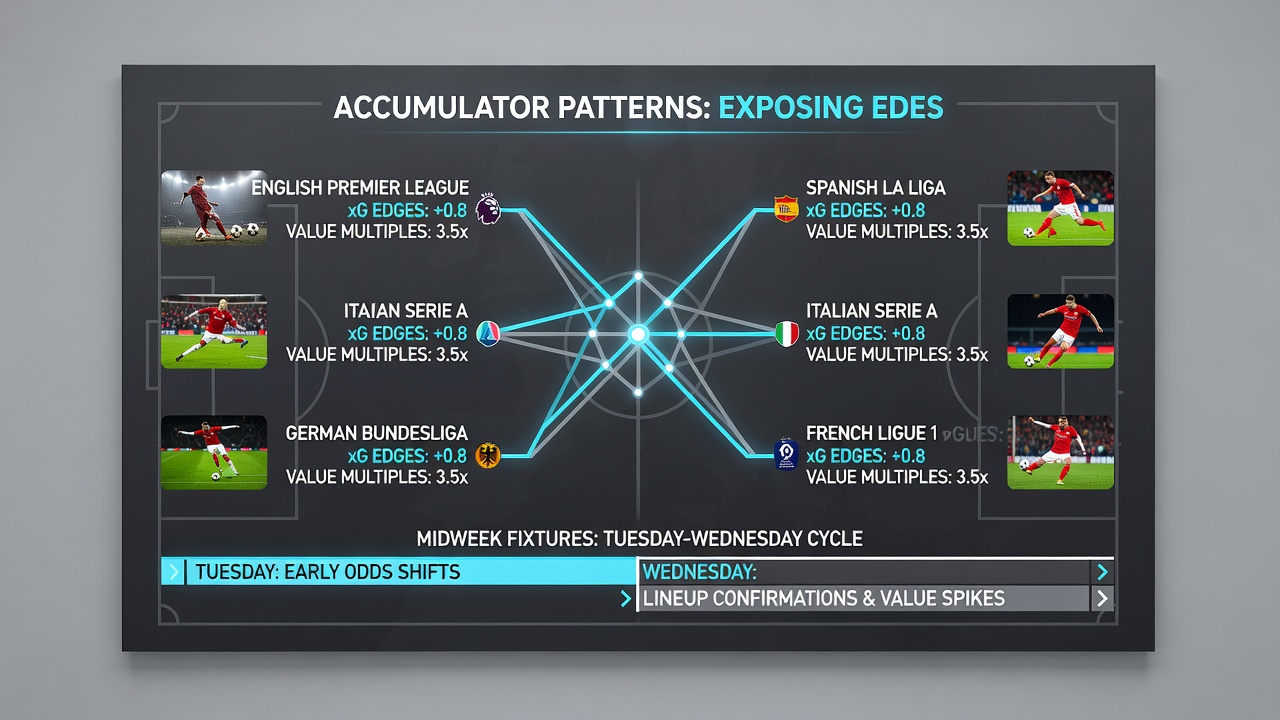
Statistical Tools That Reveal Edges
Betting syndicates and independent researchers employ regression analysis to filter noise from raw results, focusing on metrics such as shots on target, progressive passes, and set-piece efficiency under reduced rest conditions. One study released by a German sports analytics group in spring 2026 examined 1,248 midweek fixtures and found that accumulators built around defensive metrics rather than outright results produced a 4.8 percent return on investment over 18 months when stakes remained level. The methodology weights recent form against historical schedule impact, allowing patterns to surface that single-match analysis overlooks.
Practical Construction of Multiples
Bettors construct these accumulators by first selecting the core leg that carries the strongest statistical deviation, then layering complementary selections that share the same underlying cause such as travel fatigue or squad rotation. A typical structure might start with a low-scoring German cup tie, add a draw from a Spanish side returning from continental travel, and finish with a narrow victory from a Scandinavian team enjoying a full week of preparation. Because the legs share schedule-related drivers, variance decreases compared with random selections, and historical back-testing confirms the approach across multiple seasons.
External Factors and Data Sources
Weather patterns, referee assignments, and broadcast scheduling also influence midweek outcomes, yet these variables integrate into existing models once identified. According to reports published by the European Sports Betting Association, participation in accumulator products rises 18 percent during midweek rounds compared with weekend fixtures, and this increased volume creates liquidity that sharpens odds but simultaneously highlights inefficiencies when patterns repeat. Academic papers from institutions in the Netherlands and Portugal further support the observation that schedule-adjusted expected-goal models outperform standard metrics during congested periods.
Conclusion
Accumulator patterns tied to midweek European soccer fixtures continue to surface through systematic analysis of schedule density, squad composition, and historical performance data. Researchers and analysts across multiple countries track these edges using standardized statistical frameworks, and the resulting multiples offer structured approaches grounded in observable trends rather than isolated results. As leagues adapt calendars through June 2026 and beyond, ongoing data collection will refine teh models that currently expose these recurring opportunities.