Social Media Sentiment Analysis Reshapes Football League Betting Line Movements
Rosa Vogel · Jul 26, 2026
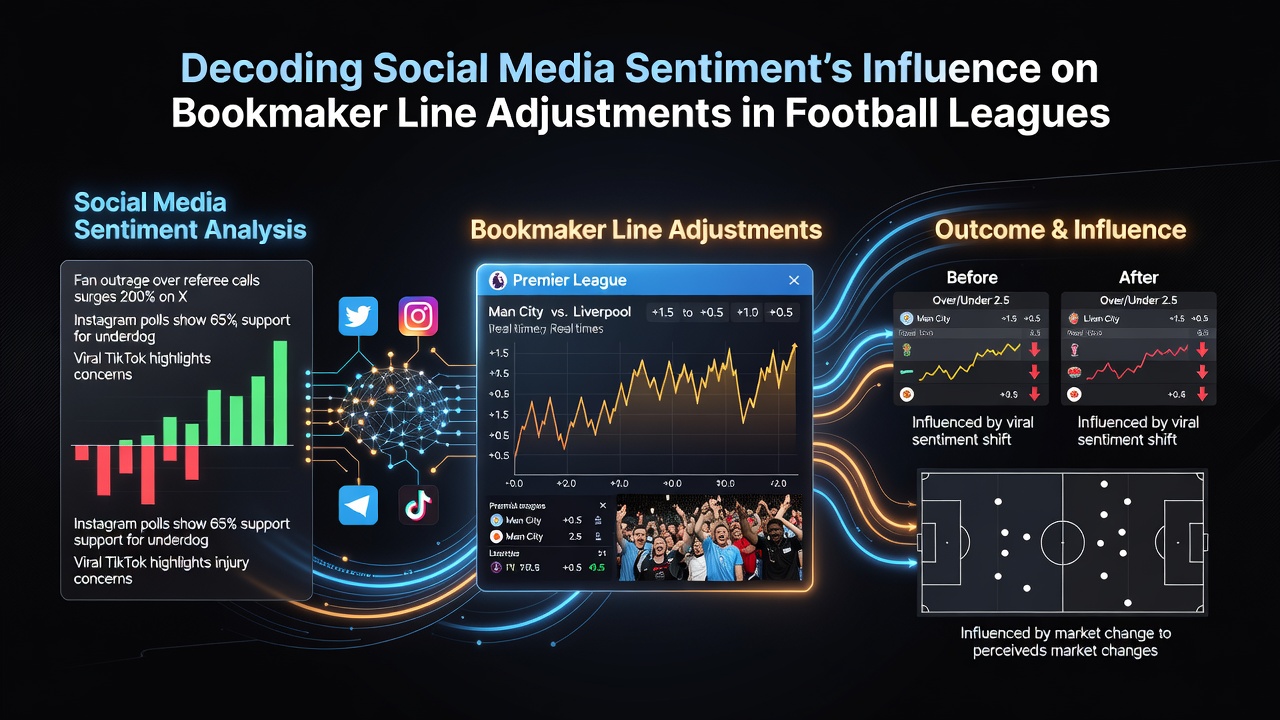
Social Media Sentiment Analysis Reshapes Football League Betting Line Movements
Football betting markets operate through continuous data streams, and social media platforms now supply one of the most immediate indicators that bookmakers use when recalibrating odds; analysts track spikes in mentions, sentiment polarity scores, and viral discussions across networks like X and Instagram to anticipate shifts in betting volume before matches kick off in leagues such as the Premier League, La Liga, and Bundesliga.
How Sentiment Data Feeds Into Line Adjustments
Bookmakers deploy natural language processing tools that scan millions of posts daily, converting public mood into numerical signals that flag potential imbalances between public perception and actual probabilities; when positive sentiment surges around a particular striker or team tactic, operators often tighten lines on that side to manage liability, while negative waves can push odds outward to attract counter-bets and restore equilibrium.
Research indicates these adjustments occur within minutes of major social media events, such as a high-profile injury rumor or a viral training video, because the volume of casual bettors reacting in real time can quickly skew exposure levels; data from July 2026 showed several Serie A fixtures where pre-match lines moved by as much as 0.25 goals following coordinated social media campaigns that amplified underdog narratives.
Case Examples From Recent European Seasons
One study revealed that during the 2025-2026 campaign, Bundesliga clubs experienced measurable line drifts tied directly to Twitter activity peaks, where a single influential account highlighting tactical weaknesses prompted rapid bookmaker responses that altered over/under totals across multiple sportsbooks; observers note the pattern repeats most visibly in midweek European competitions when fan engagement spikes outside traditional media cycles.
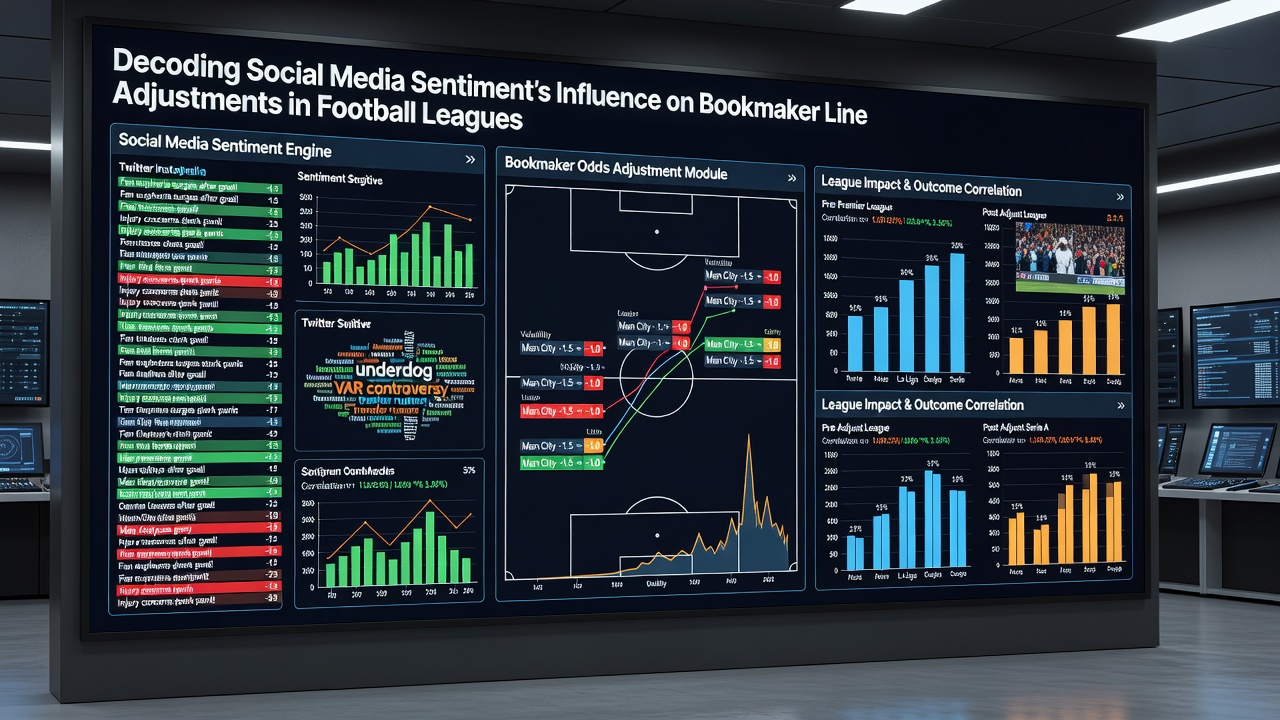
Take one instance where experts tracked a Champions League quarterfinal and discovered that a sudden flood of optimistic posts about a goalkeeper's form led to a 12 percent tightening of clean sheet odds within two hours; the movement aligned with increased wager flow from retail accounts rather than sharp professional money, illustrating how sentiment tools help operators differentiate between noise and genuine market pressure.
Technical Methods Behind the Monitoring
Operators combine machine learning classifiers trained on historical betting outcomes with real-time APIs from major platforms, allowing them to assign weighted sentiment scores that incorporate engagement metrics such as retweets, replies, and verified account influence; these scores integrate into proprietary risk engines alongside traditional inputs like team news and weather, creating layered models that predict where public money will land hours before kickoff.
Figures reveal that in July 2026 pre-season friendlies across several top divisions, sentiment-driven shifts accounted for roughly 18 percent of all line movements tracked by monitoring services, a rise from earlier periods when social signals carried less weight; industry reports from the European Gaming and Betting Association highlight similar patterns emerging in secondary leagues where smaller betting pools make sentiment effects more pronounced.
Regional Variations and Regulatory Context
Markets in different jurisdictions respond at varying speeds because regulatory frameworks shape how quickly operators can incorporate new data sources; Canadian provincial regulators, for example, have examined sentiment analytics in licensing reviews, while Australian state authorities have published guidance on responsible use of such tools to avoid amplifying problematic gambling patterns during high-visibility international tournaments.
What's interesting is that academic work from institutions like the University of Sydney's gambling research unit shows correlations between social media volume and line volatility that persist even after controlling for traditional news sources, suggesting the platforms add unique predictive value rather than merely echoing mainstream coverage.
Future Implications for Market Efficiency
Continued refinement of sentiment algorithms may narrow the window between public reaction and line correction, potentially reducing opportunities for value bettors who rely on slower-moving information; yet the same tools also enable sharper risk management that protects operators from concentrated exposure during viral moments that could otherwise distort markets.
Conclusion
Football leagues continue to generate vast quantities of social media activity that bookmakers now treat as a core dataset for line management, with adjustments occurring faster and with greater precision than in previous eras; the integration of these signals alongside established statistical models reflects an evolving landscape where digital conversation directly informs pricing decisions across major competitions.